














































F1 Championship Guide
F1 Championship Guide
The F1 Championship is more than a list of races. It is a season-long contest that builds in pressure, emotion and significance from one Grand Prix to the next. For fans, that is what makes Formula 1 so absorbing. You are not just watching cars circulate for results on a Sunday afternoon. You are following momentum, rivalries, recovery drives, title swings and weekends that can change the entire tone of a season.
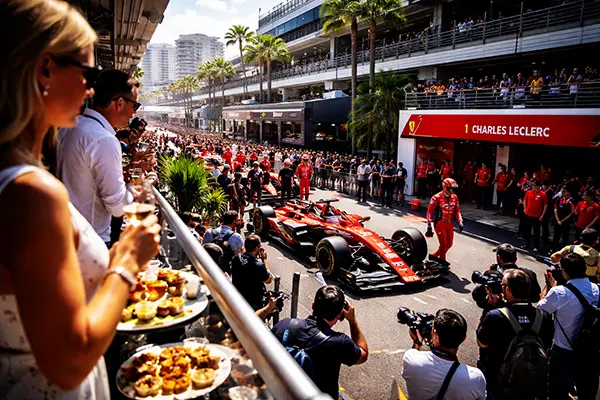 That broader context is what makes attending a Grand Prix so impactful. When you arrive at the circuit, you are not stepping into something isolated. You are stepping into a live chapter of a championship already full of context. You know who is under pressure. You know who needs a clean weekend. You know which teams are on the rise and which drivers cannot afford another mistake. The live atmosphere feels stronger because everything already means something before the lights even go out.
This page is designed to explain the F1 Championship in the way most real fans naturally think about it. The focus stays on the three core elements of a standard Grand Prix weekend: practice, qualifying and race day. It also looks at where avid fans usually prefer to sit, how general admission compares with grandstand seating, and what to understand about premium package types before moving on to race-specific ticket pages.
F1 Championship and F1 Dates
F1 Dates matter because they shape the flow of the season as much as the calendar itself. Early races bring hope, uncertainty and possibility. Mid-season rounds start revealing who truly has pace and who is beginning to fall away. Later races can feel heavier, with every point carrying more weight once the championship picture sharpens.
For supporters planning to attend, the timing of a Grand Prix can be just as important as the location. Some fans love the idea of a traditional summer circuit with a deep motorsport culture. Others prefer a destination race in a major city. Some want an event that suits a long weekend away, while others want to attend when the title fight looks most alive. The best race is not always the most famous one. It is often the one that fits the moment you want in the season.
That is why a good F1 Championship guide should not treat every race as interchangeable. Dates affect the mood of the year, and that mood changes how a Grand Prix feels in person.
F1 Championship and F1 Schedule
The clearest way to explain the F1 schedule is also the most useful one: a normal Grand Prix weekend is built around practice, qualifying and race day.
That is the structure most fans know and care about. It is also the right structure to use on a fan-first page. There are other format details around selected weekends, but they are secondary. The backbone of Formula 1 remains the same. Friday is about learning and preparation. Saturday is about pressure and pace. Sunday is about the race itself.
This matters because each day gives the weekend a different rhythm. Practice lets the event breathe. Qualifying sharpens the tension. Race day brings a release. When you attend all three stages, you do not just see the result. You get how the whole weekend develops.
Standard days of the Grand Prix weekend
Friday is practice day. It is the day when the circuit wakes up properly and the weekend begins to take shape. Teams start working out what the car wants at that track, and fans get their first real sense of the speed, sound, and flow of the venue. Practice can be a brilliant day for people who enjoy taking the circuit in at a slightly calmer pace. You notice more. You can compare sightlines. You can see where the cars are best and where the crowd gathers.
Saturday is qualifying day on a standard Grand Prix weekend. This session is when the atmosphere tightens. Every fast lap feels important. The mood changes because the margin for error shrinks dramatically. For many avid fans, qualifying is one of the best parts of Formula 1 because it exposes the performance of the car and driver so clearly. It is pure pressure, pure commitment and pure consequence.
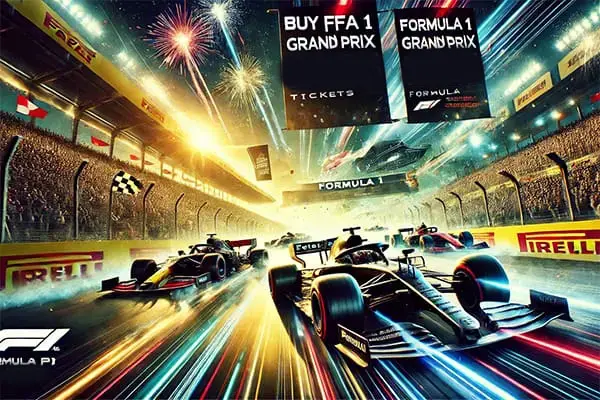
Sunday is race day. This serves as the focal point for the entire weekend. The build-up feels longer, the crowd is louder, and the first lap carries a kind of energy that is difficult to match anywhere else in sport. Everything the teams have worked on through practice and qualifying now has to hold up in real conditions. The strategy becomes real, the racing becomes meaningful and the crowd reaction becomes part of the spectacle.
That is the cleanest and strongest explanation for a Grand Prix weekend: practice, qualifying, and race day.
F1 Championship and F1 Standings
The F1 standings turn individual races into championships. A great overtake is exciting on its own, but it means more when it changes the title picture. A poor qualifying session hurts more when it compromises a driver already under pressure. A recovery drive feels bigger when the points actually matter.
For committed fans, the final lap is where Formula 1 becomes more emotional than many people expect. It is not just the spectacle of speed. It is the meaning behind the moments. The crowd is not only reacting to what it sees in front of it. It is reacting to what that moment might change.
That is why attending a Grand Prix during a live championship battle can feel especially powerful. You are not simply watching a race unfold. You are watching a season move in real time.
F1 Championship and F1 Rules
F1 Rules matter because they shape how the sport works at every level. They define the sporting framework, the technical directions, and the boundaries within which teams and drivers compete. Even fans who do not follow every detail of the regulations still feel their effects.
Rules influence how cars behave, how teams approach a weekend, how strategy develops and why certain circuits expose strengths or weaknesses more clearly than others. They are one reason Formula 1 never feels static for very long. A team can arrive looking strong at one venue and less convincing at the next because the sport always tests a complex mix of speed, balance, tire use, efficiency, and decision-making.
You do not need to be deeply technical to enjoy the F1 Championship, but it helps to know that the sport is always about more than raw pace alone.
F1 Championship and F1 Technical Regulations
F1 technical regulations sit behind a lot of what fans notice without always naming. They help explain why one team thrives at a quick, flowing track while another looks better in a slower, more technical setting. They also shape how teams develop through the year, which is one of the reasons a season can change so much between the opening rounds and the final stretch.
For a fan, the value of understanding these differences is simple. It makes the championship feel richer. You are not only watching the same grid repeated at different venues. You are watching the same teams face different questions at every stage of the calendar.
F1 Championship and F1 Circuit Guide
An F1 circuit guide matters because not all Grands Prix feel the same. Some circuits are known for overtaking and braking zones. Some are known for flowing speed and commitment. Some are famous because of the atmosphere, history, or setting as much as the on-track action itself.
That variety is part of what makes the F1 Championship so personal. One fan may love a classic circuit with deep roots in the sport. Another may want a race that doubles as a city break. Another may care most about seeing the cars through a famous corner or a section where drivers are really on the limit.
The right Grand Prix is not always the one with the biggest reputation. It is the one that matches what you want for the weekend.
F1 Championship and F1 Venue Navigation
F1 Venue Navigation is always race-specific, because every circuit has its own layout, access points and viewing logic. Even so, one point applies almost everywhere: where you sit changes how you remember the event.
A Grand Prix can feel completely different depending on whether you are near the main straight, a challenging braking zone, an iconic corner or a more flexible roaming area. That is why experienced fans tend to think carefully about the shape of the circuit, not just the ticket category.
Parts of the circuit F1 avid fans prefer to sit in.
Avid fans usually choose their seat based on what they most want to experience, not just what sounds impressive on paper.
The top choice for many serious supporters is a heavy braking or overtaking zone. This is where you get the strongest sense of commitment, late braking, attack and defence. You can often see drivers trying to force a mistake, defend a position or set up a move. If your priority is racecraft and action, the hairpin is often the most satisfying area of the circuit.
Second for many fans is the start and pit straight. This area is about theatre as much as technical action. You get the build-up before the start, the release at lights out, pit activity, and the finish itself. It may not always show the most repeated passing moves, but it offers a strong sense of occasion and can feel especially special on Sunday.
Third is a signature corner or fast, famous section of the track. This is often the preference of fans who love seeing Formula 1 cars at full commitment. It is less about overtaking and more about appreciating the speed, direction changes, and distinct identity of that circuit. If you value witnessing the cars in their full glory, this option often holds great appeal.
Those are the three most recognised instincts among knowledgeable fans: the braking zone first, the pit straight second, and the signature corner third.
H2: General admission or grandstand seating
General admission and grandstand seating suit different kinds of people, and the best option depends on how you want the day to feel.
General admission usually suits fans who like freedom and movement. It can work very well for people who want to explore the venue, try different sightlines and view the circuit from more than one angle. On the right track, general admission can be lively, flexible and adventurous.
Grandstand seating usually suits fans who want a more defined race-viewing experience. You know where you’re going, which section you’re committing to, and you don’t have to spend the day looking for the next vantage point. For many avid fans, grandstands offer the best balance between live atmosphere and certainty.
The key question is not which category sounds better. It is how you want to experience the day. If you want roaming freedom, general admission may suit you. If you want a strong fixed view of a meaningful section of track, grandstand seating is often the better fit.
F1 Championship and F1 Tickets
When people search for F1 tickets, they are often trying to decide two things at once: which race they want to attend, and what kind of live experience they want once they get there.
That is where a championship guide becomes useful. It helps you think clearly before you narrow things down. It helps you decide whether you want ambience first, comfort first or a balance of both. It helps you think about the sort of circuit position that matters most to you. And it helps you determine whether you are really looking for a simple race ticket, a reserved grandstand seat, or something more premium.
A very useful question to ask yourself is this: do you want to feel the race or watch it comfortably?
That question tends to cut through a lot of confusion. When the cars go past, do you want the full noise and atmosphere of open-air viewing, or are you satisfied with a more comfortable hospitality environment? Is behind-the-scenes access important, or is the race itself the real priority? Once framed that way, genuine fans typically respond quickly.
F1 Championship and F1 Live Stream
For many people, the path to attending a Grand Prix begins with following the season from a distance. Watching the championship unfold round by round builds familiarity, emotional investment and anticipation. By the time you reach the circuit in person, the event already matters to you.
That is what gives a live weekend so much extra force. You are not only seeing the cars. You are seeing the latest chapter in a season you already care about. The atmosphere hits harder because you understand the backstory, pressure, and stakes.
F1 Championship and F1 Qualifying Times
F1 qualifying times matter because qualifying is one of the most intense and revealing parts of a race weekend. The margins are tiny, the pressure is obvious and the consequences are immediate. One excellent lap can transform expectations. One mistake can reset the whole tone of the weekend.
For fans at the circuit, qualifying often provides some of the purest drama of the event. You can feel the tension build with every run. It is one of the clearest examples of why Formula 1 is not just about race day alone.
F1 Championship and F1 Entry List
The F1 Entry List gives the championship its human side. Drivers and teams are not just names on a page. It is their personalities, partnerships, and rivalries that make the season emotionally engaging. The more you follow that side of the sport, the more meaningful a live weekend becomes.
At the circuit, you notice immediately how much weight certain names carry. Crowd reaction tells its own story. A favourite driver appearing on the screen, a local hero coming into view, or a major contender heading out for a critical run can change the energy around you in a moment.
Top Formula 1 hospitality packages
At the premium end of the market, Formula 1 hospitality usually falls into a few broad tiers.
At the top are the most exclusive paddock-level hospitality experiences. These are designed for guests who want a very high-end race weekend with premium hosting and a stronger access-led feel. They are usually associated with the upper end of the market and tend to appeal to people who want the most elevated version of the event.
Below that are premium hospitality packages built around a lounge, suite or hosted environment with race viewing included in some form. These may suit guests who want a polished day, with food, drinks, and comfort playing a central role in the experience.
Then there are hybrid hospitality options, which many serious fans find especially appealing. These typically combine a more comfortable hospitality base with open-air viewing or a clearer connection to the track itself. For many people, that balance works best because it lets them enjoy the race atmosphere without giving up the comfort of a premium setting.
The important thing is not to judge a package by the label alone. What matters is how the day actually works. Is the viewing open air or enclosed? Is the race experience central, or does the setting place more distance between you and the atmosphere? Is movement between spaces possible? Those are the questions that make the difference.
Why the right F1 Championship choice starts with experience
The best Formula 1 choice is rarely the one that sounds the biggest. It ‘s the one that feels right for the way you want to experience the race.
Some fans want a raw atmosphere, open air, and a part of the circuit where they can really feel the speed and tension of the sport. Others want a more comfortable premium setting, with hosting, ease, and structure built into the day. Some want both, with comfort supporting the race rather than replacing it.
That is why the F1 Championship is so compelling. It gives different fans different ways to connect with the sport they love. The important thing is choosing the race and the experience that match your version of the ideal Grand Prix weekend.
Ready to choose your Grand Prix weekend?
Once you know what matters most to you, the right next step becomes much clearer. You may want an open-air atmosphere, a fixed grandstand in a strong section of the circuit, or a more premium day with comfort built in. You may care most about a famous track, a certain point in the season or a race that fits a wider trip.
The key is not to chase the broadest list of options. It is to choose the experience that fits the way you want Formula 1 to feel.